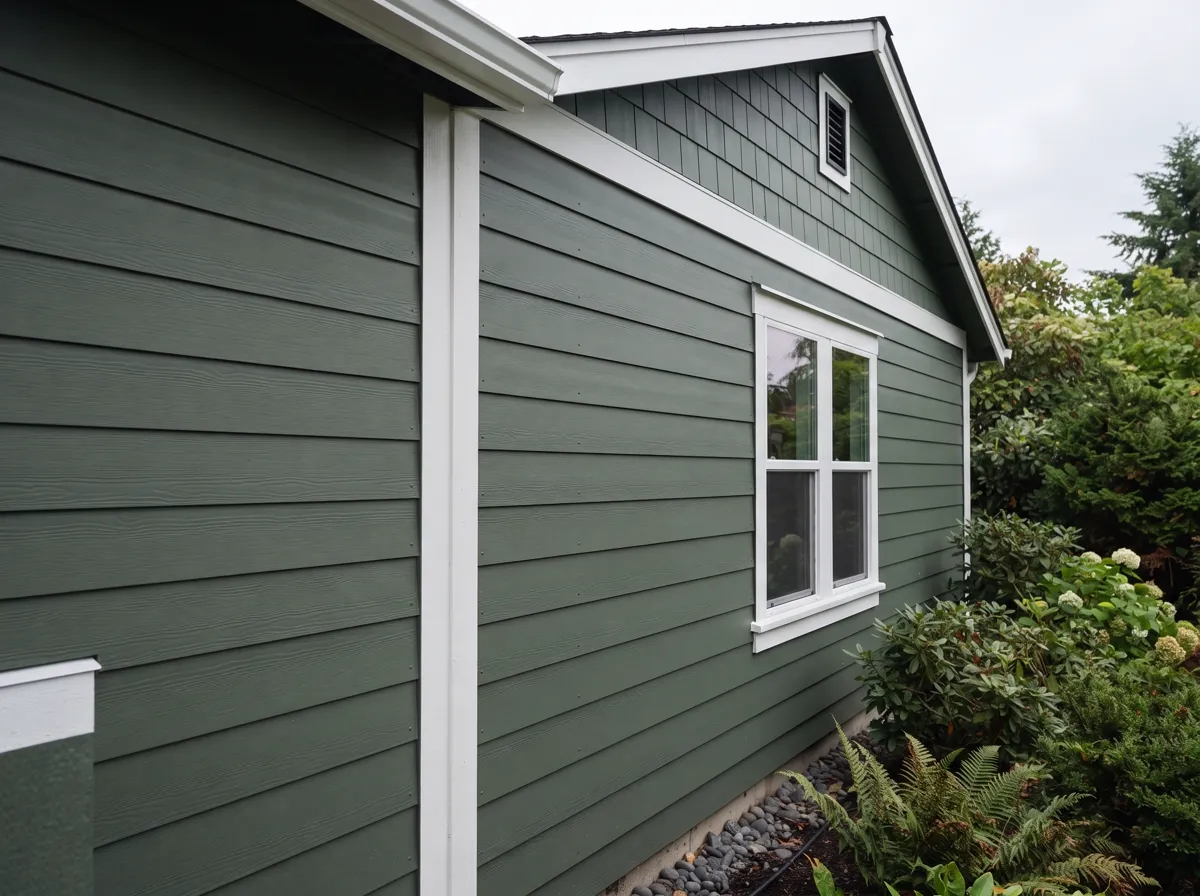
Walls are built to drain, not to be sealed
Water will get behind siding. That is expected, and a wall that is built properly lets it run down the barrier and back out at the bottom. This is why the lap direction matters, and why sealing everything shut is a mistake — caulk in the wrong place traps water against the sheathing instead of letting it leave. If someone proposes to fix a leak by caulking more, that is a short-term answer.
Openings are where it actually fails
Almost every siding failure we open up starts at a window, a door, a light fixture or a hose bib. Flashing those openings, and flashing the sill under a window so any water that gets in runs back out, is the difference between a wall that lasts and a wall that looks fine until it does not. Ask any bidder how they flash a window opening. The answer tells you a lot.
What comes off with the old siding
We do not know the condition of the sheathing until the siding is off, so rot is priced as a change rather than guessed at up front. When we find it, you get photos, a price and a written change order before we carry on. Soft framing around windows and at the bottom of walls is the common one, and it is much cheaper to fix while the wall is open.
How We Run A Job
- 01
Walk The Whole Property
Not just the room you called about. Problems travel — a roof leak is a drywall job and sometimes a framing job, and it is cheaper to find that now.
- 02
Scope, Price And Schedule
One written scope covering every trade, one fixed price, and real dates. If a permit or an engineer is needed, that is in the schedule rather than a surprise later.
- 03
Permits And Approvals
We pull them, we schedule the inspections, and we keep the paperwork clean so it holds up when you sell the house.
- 04
One Crew Lead, Start To Finish
The same person runs your job every day and coordinates every sub. You get one number, and you are never the one chasing a trade.
- 05
Walk It Before We Call It Done
Punch list closed with you standing there, final inspections signed off, and the site left clean.
Siding & Exterior: common questions
Do you have to take the old siding off?
For most jobs, yes. Siding over the top of old siding hides whatever is wrong with the sheathing and makes the trim and window details awkward. There are cases where it is reasonable, and we will tell you if yours is one.
Should I replace the windows at the same time?
If the windows are near the end of their life, this is the moment. The wall is open, the openings can be flashed properly, and the trim gets detailed once instead of twice. If the windows are sound, we reflash what we can reach and leave them alone.
How can I tell if water is already getting behind my siding?
Look for paint failing in patches, trim that feels soft at the bottom, staining below windows, and siding that has cupped or pulled away. Inside, look for cracked drywall at window corners. None of those are proof on their own, so we open a small area and show you what is back there before writing a scope.
Building throughout east Multnomah County
Most of our work is in east Multnomah County and the communities around it. If you have a project that crosses trades — or a problem you have already been told is somebody else's department — call and we will tell you straight whether it is ours.