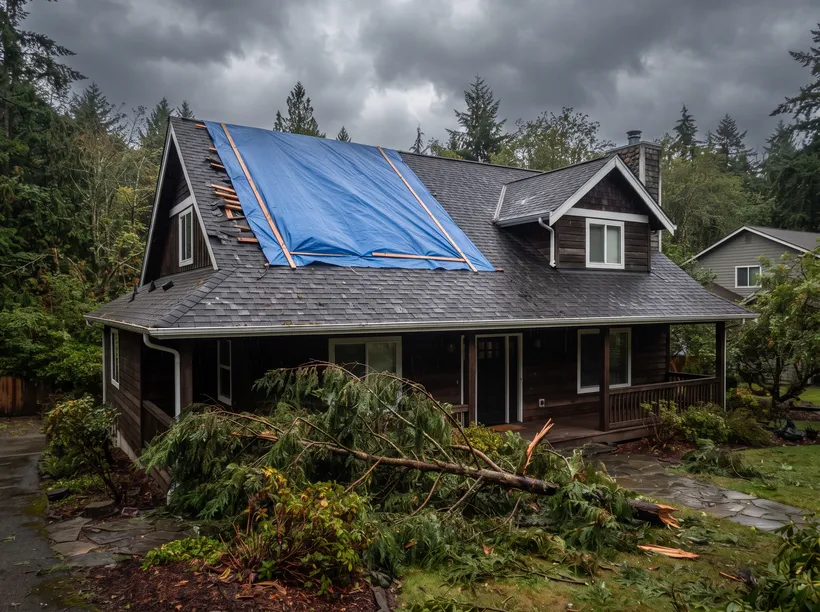
Sudden damage and slow damage aren't the same claim
Insurers generally cover damage from an event — wind breaking the seal on shingles, hail bruising them, a limb coming through. Wear, moss and maintenance that got put off are generally not covered, however bad they look. Most arguments come down to which of those two the damage is, which is why photos with a date on them count for more than anything said on the phone.
What wind and hail actually do
Wind works at the edges and the ridge, where it can get under a shingle and break the seal. The shingle still looks fine from below and is simply no longer stuck down. Hail bruises the mat under the granules, so the shingle often fails a season or two later instead of that week. Neither one shows up from the driveway, and that's how real storm damage gets missed.
Before you call anybody
Photograph what you can see safely from the ground, and don't let anyone start a permanent repair before the damage is documented. Check your own policy for the window you have to report in, because that's one of the few hard deadlines in this. Then get somebody up there who will put the inspection in writing whether or not there's a claim in it for them.
How it works
- 01
Free inspection
We climb up, document everything with photos, and tell you straight what your roof actually needs — repair or replacement.
- 02
Fixed written quote
You get one clear price in writing. The number we quote is the number you pay — including the insurance paperwork if it's a storm claim.
- 03
Done right, cleaned up
Our own crew does the work, usually within the week, and magnet-sweeps your yard before we leave. No subcontractors.
Storm Damage: common questions
Should I file the claim before or after the inspection?
Get the roof looked at and documented first. If there's nothing up there, you haven't opened a claim over a storm that missed you. If there is, you file with photos and a written report instead of a guess.
My roof looks fine from the ground. Is an inspection worth it after a storm?
Often, yes. Broken seals and hail bruising don't show from below, and they tend to turn into leaks later, once the reporting window on that storm has closed. Either way the inspection puts the roof's condition on record.
Do you handle the emergency tarping too?
Yes, where water is actively getting in. A tarp buys time and keeps the inside damage from spreading while the claim and the permanent repair get sorted out. It's a stopgap, not the fix, and the quote covers the real work separately.
Proudly local to Washington County
If you're anywhere in Washington County, we're probably already on a roof near you this week.